Technical Support Outsourcing Strategy: Scaling Specialized Expertise in 2026
Move beyond reactive ticketing to predictive, AI-augmented resolution centers.
The Shift from Labor Arbitrage to Intelligence Arbitrage
What is Intelligence Arbitrage in Technical Support? Intelligence Arbitrage is the 2026 strategy of outsourcing not for lower labor costs, but for access to superior AI-driven diagnostic workflows and specialized domain expertise. It prioritizes “Value per Resolution” over “Cost per Hour,” allowing firms to solve complex engineering issues faster than an in-house team could.
In the legacy BPO model, the goal was headcount volume. In the modern **Technical Support BPO** model, the goal is “Intelligence Density.” By partnering with a provider that leverages [Strategic KPO Solutions](/strategic-bpo-kpo-solutions-guide/), you access a workforce that functions as a direct extension of your engineering team. This shift is validated by [Forrester’s 2026 Predictions](https://www.forrester.com/bold), which identify ‘Outcome-Based IT Support’ as the new enterprise standard.
Comparison: Traditional BPO vs. Intelligence-First Support
| Feature | Legacy Support (BPO) | Intelligence-First (CapStonePlanet) |
|---|---|---|
| Operational Focus | Ticket Volume & AHT | First-Call Resolution & Information Gain |
| Technology Layer | Basic CRM / Phone | [Agentic AI](/agentic-ai-customer-experience-solutions/) & Predictive Diagnostics |
| Agent Profile | Generalist Call Taker | Tier 2/3 Specialized Technicians |
| Compliance Standards | Basic SLA Adherence | [ITIL v4 Framework](https://www.axelos.com/certifications/itil-service-management) & SOC2 |
Tiered Support Model: Integrating Agentic AI with Human Engineering
How do support tiers work in 2026? The 2026 tiered support model uses Agentic AI as the Tier 1 gatekeeper, resolving up to 40% of routine queries autonomously. Tier 2 consists of hybrid technicians using AI-augmented diagnostics, while Tier 3 involves senior engineers managing complex bugs and infrastructure escalations.
This structure ensures that your high-cost engineering talent is never bogged down by “Level 1” noise like password resets or basic connectivity checks. It seamlessly bridges with your [Live Chat & Email Support](/live-chat-email-support-integration/) to provide a unified digital front. Our technicians are trained to [CompTIA standards](https://www.comptia.org/), ensuring a baseline of global technical excellence.
- Tier 1 (Autonomous): AI agents resolve common configuration issues using real-time NLP.
- Tier 2 (The Diagnostic Core): Specialized technicians handle software-specific troubleshooting.
- Tier 3 (The Engineering Escalation): Direct access to developers for bug fixes and API integrations.
Predictive Issue Resolution: Beyond Reactive Ticketing
What is predictive support? Predictive support uses machine learning to detect system anomalies or user behavior patterns that indicate a coming failure. By resolving the issue before the customer notices, businesses eliminate the ticket entirely, resulting in near-perfect CSAT scores.
By leveraging [Agentic AI in Customer Experience](/agentic-ai-customer-experience-solutions/), our teams move from “Waiting for the call” to “Monitoring the pulse.” This proactive approach is essential for SaaS companies where downtime leads to immediate churn. This methodology is supported by the [IEEE Standard for Software Maintenance](https://www.ieee.org/), which emphasizes preventative measures as the highest form of service maturity.
Operational Benchmarks for Technical Support Excellence
Success in **Outsourced Technical Support** is measured by the delta between problem detection and resolution. We track the following 2026-critical metrics:- MTTR (Mean Time to Resolution): Target reduction of 35% through AI-assisted diagnostics.
- FCR (First Call Resolution): Maintaining >85% across all Tier 2 interactions.
- Resolution Velocity: The speed at which Tier 1 AI transitions to Tier 2 human expertise without context loss.
Technical Security & Data Integrity in Tech Support BPO
Is technical support outsourcing secure? Yes, when performed under a strict compliance framework. Leading providers use SOC2-compliant remote desktop tools, biometric-locked VDIs, and end-to-end encryption to ensure that sensitive user data remains protected during the troubleshooting process.
Security is the “Conversion Anchor” for technical support. Whether it’s [HIPAA for Healthcare](/outsourcing-risk-mitigation/) or PCI DSS for Finance, your outsourcing partner must treat your data as their primary liability. At CapStonePlanet, we maintain a “Zero-Trust” diagnostic environment, ensuring no PII (Personally Identifiable Information) is ever stored on agent local machines, aligning with [NIST Cybersecurity Framework](https://www.nist.gov/cyberframework) standards.
Choosing the Right Technical Support Partner (Executive Framework)
Selecting a **Managed IT Helpdesk** partner requires more than a price comparison. Use this decision matrix to evaluate potential candidates:- Domain Match: Do they have technicians with experience in your specific tech stack?
- AI Integration Depth: Is AI a “marketing buzzword” or a core part of their Tier 1 routing?
- SLA Elasticity: Can they scale up Tier 2 capacity by 300% during a major product launch?
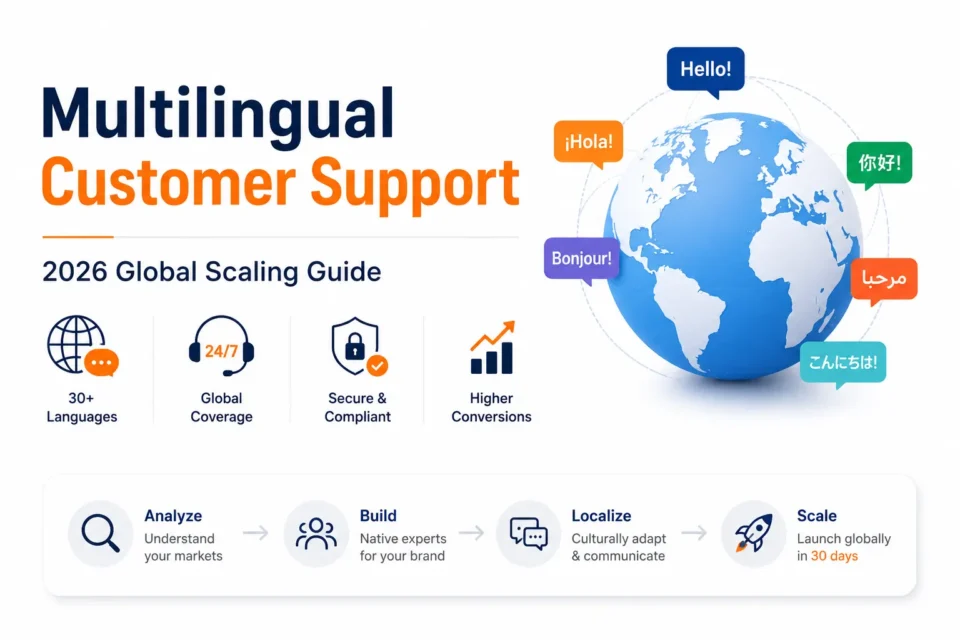
- Global Reach: Do they offer [Multilingual Support](/multilingual-support-global-scaling/) for international users?
Dominate Your Support Landscape
Stop losing customers to slow, reactive support. Deploy our 2026 Predictive Support Framework and scale your technical expertise with surgically precise engineering.
Book a Technical Support Audit