- Have any Questions ?
- info@capstoneplanet.com


What are Business Process Outsourcing Services?
Business process outsourcing (BPO) services mean outsourcing a specific business function to an outside company with which you have signed a service agreement which sets forth the service levels, key performance indicators, and reporting structure required.
The task which may be entrusted to a BPO company may either be an on-going operational task that is important to your business, but does not require full-blown ownership, or, as two major types, are either:
1. Back-Office BPO Services
These services deal with the internal workings of a business. Some examples include:
- Payroll management
- Accounts payable and accounts receivable
- Accounting and bookkeeping
- HR services
- Data entry and processing
- IT support
- Claims administration
- Order fulfillment
2. Front-Office BPO Services
This model focuses on the external facing workings of a business. It often encompasses:
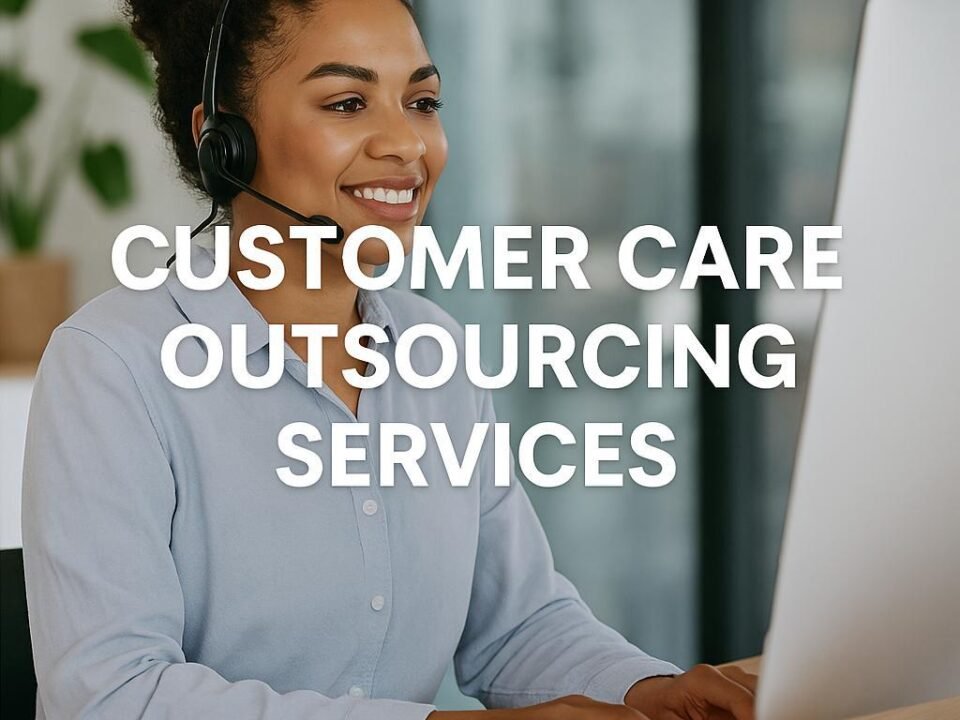
- Customer service outsourcing
- Live chat
- Technical support
- Help desk support
- Inbound/outbound call center operations
- Sales support
- Lead qualification
- Appointment scheduling
Businesses typically start by outsourcing just one or two non-core processes, such as the call center or data entry before branching into further tasks.
How modern BPO services work in 2026
BPO has moved far beyond just the prospect of low cost labor. Best in class providers utilize a hybrid delivery model that merges people, process improvement, automation, and AI.
Repetitive tasks like ticket routing, invoice matching, data extraction, standard forms processing are automated, and humans are assigned the exceptions, escalations and high value added, creative problem-solving tasks.
The hybrid model provides the following benefits:
- Velocity
- Consistency
- Scalability
- Visibility
- Long term cost efficiencies
The flip side of this hybrid model is that you should ask any BPO vendor about their automation use case, how errors are handled, and how performance is measured if AI is utilized in any part of service delivery.
BPO Delivery Models
There are three main models through which BPO services are delivered:
| Delivery Model | Typical Cost Savings | Best for | Tradeoffs |
|---|---|---|---|
| Onshore (Same Country) | 10-20% | High-control or sensitive processes | Best alignment, but lower savings |
| Nearshore (Close neighboring country) | 25-40% | Customer-facing support, close collaboration | Good time-zone alignment, moderate savings |
| Offshore (Distant country) | 40-60% | High-volume process oriented, cost savings focused | Maximum savings but more significant communication & time zone issues |
Onshore BPO’s are most suited for customer service, sales support and live interactions where working within the same time zone is crucial. Offshore BPO’s are suited for data-intensive and process-intensive work where the main objective is speed and efficiency.

Which businesses are suited to Business Process Outsourcing Services?
Not every business function should be outsourced. It’s generally the business processes which, while essential, do not differentiate one business from another, that make sense to be outsourced.
If your business predominantly fits most of these descriptions, you could benefit from BPO services:
- The tasks are monotonous and run under clear procedures.
- The task is necessary for business, but not a core skill and/or a strategic advantage for your business.
- The process consumes valuable time or management input.
- The volume of work changes depending on seasonality or the success of a campaign.
- Recruitment and training are lengthy or expensive.
- You require capacity for swift scaling but without fixed costs.
Typical BPO use cases:
- Customer Service & support: telephone operators, customer relations, chat support.
- Administration and Back Office functions: document management, data processing, archiving, data input.
- Finance and Accounting: accounts payable and receivable, payroll administration, tax support.
- Order processing and fulfillment.
- Appointment setting, lead qualifying.
When BPO isn’t a good match
BPO generally isn’t appropriate if the process is:
- Intimately tied to product strategy or decision making within leadership
- Intensely collaborative or frequently changing
- Requires intimate knowledge that can’t be clearly documented
- If critical decisions that shouldn’t be delegated must be made as part of the process.
Business Process Outsourcing services – what the benefits can be
A successful business process outsourcing arrangement may actually offer the business even more than reduced labor costs. A BPO strategy designed properly can provide efficiency, reduce management load, and even facilitate quicker business growth.
Main Business Process Outsourcing benefits:
- Reduced operating costs – cut back on costs for salaries, benefits, office space, technology, equipment and training
- Increased capacity on demand – ramp up and down your capacity as needed
- Use the knowledge of experienced professionals – the outsourcing partner brings ready-to-use expertise
- Greater strategic focus – internal employees have the opportunity to spend time on core business operations, selling, and growing your business
- Increased coverage – offering support outside of normal working hours, potentially spanning time zones
- Better process consistency – Standardized processes can deliver KPIs.
For most small to mid-sized businesses, business process outsourcing services to help a small business gain access to abilities which could be unaffordable if brought in-house.
The Price of BPO services varies greatly based on the function, location of the BPO provider, complexity of the process, compliance requirements, and level of service expected.
Generally speaking, in terms of fully loaded in-house cost:
- Onshore BPO = 10-20% cheaper than fully loaded in-house cost
- Nearshore BPO = Often 25-40% cheaper than fully loaded in-house cost
- Offshore BPO = Often 40-60% cheaper than fully loaded in-house cost
However, the most common mistake is that companies comparing the outsourced quotes only look at the salaries and not the true cost. The true comparison is to the all-in BPO cost vs. Fully loaded in-house cost.
ROI Calculation for Business Process Outsourcing Services
If your company needs to figure out whether business process outsourcing services are worth it to their company then use a practical approach to ROI rather than rely solely on quotes on the per hour price.
Calculate Your Fully Loaded In House cost
This should include:
- Base salaries
- Benefits
- Payroll taxes
- Office space/utilities
- Software licenses
- Equipment
- Management overhead
- Training/Onboarding
- Quality assurance/supervision
Often, the true cost is 1.3x – 1.5x times the base salary for in house employees
Obtain The All In BPO Cost
This should ideally have all the fees associated:
- The cost of the service
- Set-up/Implementation costs
- Technology/integration costs
- Minimum commitment costs
- Volume trigger pricing points
- Escalation/support costs
Step 3: Account for Transition Costs
Transition costs are very often overlooked. These can include:
- Time to transfer knowledge
- Concurrent execution during hand-off
- Internal project management
- Extra QA during early ramp-up
- Document/SOP creation
Typically, transition costs will amount to between 15-25% of first year contract value.
Step 4: Determine the Value of Available Internal Capacity
This is the step where most ROI calculations fall short. If outsourcing gives you 15-20 hours back per week for your internal team, what higher-value activities can they accomplish during this time?
- Sales calls
- Client retention calls
- Process improvement efforts
- New product support
- Revenue-generating client work
Simple Rule of Thumb
If your total all-in BPO cost (including transition) is at least 20% less than your fully-loaded in-house cost post year one-and your internal team can shift the available hours to more value-generating work-it’s worth seriously investigating outsourcing.
Need a hand assessing your true outsourcing ROI?
Before signing on the dotted line with a provider, evaluate how the BPO pricing compares with your actual, fully-loaded in-house costs. An easy cost analysis will avoid costly mistakes.
This is What Your BPO Transition Actually Looks Like
Most often, outsourcing success is misunderstood to mean you sign a contract and, boom, the provider is executing. That’s just not how the process works, but rather in stages.
| Phase | Typical Timeline | What Occurs? |
|---|---|---|
| Scoping & Contracting | 4-6 weeks | Define processes, SLAs, KPIs, work flows, reporting cadences, and governance |
| Knowledge Transfer | 4-8 weeks | Document SOPs, provider team training, systems configuration, exceptions mapping |
| Parallel Run | 2-4 weeks | Provider runs in parallel to your internal operations with errors being monitored and corrected |
| Steady State | Starts roughly at week 10-18 | Provider executes and your team monitors, QA’s, and reports. |
A mini-pilot will stabilize in 6-8 weeks. Larger, multi-function outsourcing relationships can require 4-6 months to achieve full maturity.
Risks of Business Process Outsourcing Services (And How to avoid them)
The word’s everyone use is “data security” and “communication problems”, but the actual risks that cause a company pain are mostly operational and contractual.
1. Vendor Lock-In
When the provider holds ownership of process documentation, knowledgebase of staff and systems access, then changing later is costly and time consuming.
How to mitigate this risk:
- Continue to co-own SOPs.
- Clearly define data portability in the contract.
- Negotiate transition support up-front.
- Retain transparency over processes internal to you.
2. Erosion of Service Quality
Providers often perform well in onboarding, but service quality declines due to staff turnover, shifting priorities or lack of oversight from service provider management.
How to mitigate this risk:
- Measure performance through quantifiable SLAs.
- Hold quarterly business reviews.
- Monitor error rates and customer satisfaction metrics closely over time.
- Conduct spot audits or mystery shopping where appropriate.
- Define service credits or penalties that are meaningful to you.
3. Hidden Costs that wipe out your cost savings.
Costs for additional QA, re-work, your own oversight, travel, re-training and scope creep often eliminate anticipated cost savings.
How to mitigate this risk:
- Track all transition and ongoing oversight costs from day one.
- Ask for a line-item explanation of all proposed costs.
- Be clear about what would constitute “out of scope”.
- Conduct contract review against invoices on an ongoing basis.
4. Internal Loss of Capability
If you outsource a function and don’t continue to build up internal expertise, you may no longer have the capability to take the function back in-house when required.
Risk mitigation strategy:
- Keep internal documentation updated
- Designate at least one internal process owner
- Regularly review workflow processes
- Develop a contingency or fall-back strategy
5. Security & Compliance Gaps
Financials, customer records, health data, regulated workflows. Verification is crucial, not assumption.
Risk mitigation strategy:
- Ensure relevant certifications are verified (e.g., SOC 2, ISO 27001, HIPAA, GD PC)
- Review incident response process
- inquire about access controls, audit logs, encryption capabilities
- Have data handling responsibilities contractually established
How to pick a good BPO Provider.
Deciding on a BPO service provider has nothing to do with whose sales-person can talk the loudest. Instead, it comes down to finding a company with an operational fit, acceptable risk, and a consistent, long-term performance history.
What to look for in a BPO partner:
- Relevant experience in your industry
- Is the company experienced with your particular process for other organizations in your line of business?
- Do they have case studies and references
- Request real references who you can connect with.
- Security maturity
- Can they demonstrate compliance in your regulatory environment and are they audit-ready?
- Technology capability
- Do you understand what type of tools and platforms they utilize for both their own management and process execution?
- Workforce stability
- Do you know their attrition, training, and quality assurance processes?
- Do you have transparency into pricing
- Does the contract clearly define all associated costs and minimums?
- Do you understand the service governance
- Structure of your meetings and reviews, escalation processes, reporting cadences, etc.?
- Are exit provisions in place
- Data ownership, transition support, notice period prior to termination.
Beware of anyone who can’t effectively describe processes for handing over data, documentation ownership, and their exit procedures.
BPO in 2026 Trends What is Changing right now?
Here are key developments in business process outsourcing in 2026.
1. AI is integral to delivery
Established service providers incorporate robotic process automation and AI tools toautomate many tasks that historically were manually intensive, such as ticket sorting, document management, data extraction and basic monitoring. It is essential for a good service provider to have the proper oversight and to be capable of handling exceptions when the automation can’t process the work.
2. Outcome-based pricing models continue to grow
Several BPO companies are beginning to structure contracts not just based on the volume or cost of resources used, but by service levels and business results-such as turnaround times, error rates, and first call resolution.
3. Nearshore receiving more attention
Many organizations are shifting toward nearshore BPO for customer facing operations due to the more balanced approach that it represents when compared to fully offshore; that is to say: cost savings with a better alignment of time zones and communications.
Frequently asked questions about business process outsourcing services:
What are business process outsourcing services?
BPO services refer to the delegation of certain business functions-such as customer service, payroll, accounting support, and data processing to an external organization by contract and at defined levels of service and performance.
How much do BPO services cost compared to internal staff?
Costs vary significantly depending on process, provider location and complexity, onshore is said to be 10-20% cheaper than in-house, nearshore 25-40% cheaper, and offshore 40-60% cheaper. Remember first year transition costs tend to impact short-term savings so always compare all-in BPO to total internal cost.
Are business process outsourcing services good for small business?
They can be beneficial as many are structured to provide flexibility and scalability. The challenge for small businesses is their volume and budget may not justify hiring a full internal team for each function.
What are the biggest risks associated with outsourcing business processes?
Vendor lock-in, decline in quality over time, hidden costs, loss of internal capabilities and compliance gaps. Risks can be managed with tight contracts, robust governance and thoughtful vendor selection.
How long does it take to transition to a BPO vendor?
One function pilot can typically stabilize in 6-8 weeks. Multi-function or more complex outsourcing engagements usually require 4-6 months to achieve full maturity.
Can my organization outsource processes that include confidential customer data?
Yes, but only with tight controls. Confirm provider’s readiness for compliance, examine security processes, and ensure data handling terms are tightly integrated into the contract.
Bottom Line: Is Business Process Outsourcing Services the Right Thing to Do?
By utilizing the help of business process outsourcing services, you can take on less work, become more scalable, bring down costs, and free up your current staff to do higher value work. Of course, these benefits are only realized if you choose the correct process, correct provider and correct contractual arrangement.
The most effective strategy is to test the waters, so to speak, by choosing one function that is well-defined and non-core, doing a test run with it and measuring the performance, cost and quality as opposed to the in-house one before increasing use.
When implemented properly, outsourcing can contribute to significant growth. It can also cause unforeseen costs and future problems if not done correctly; hence, the evaluation process will have to be meticulous rather than focus purely on savings.
Not convinced whether outsourcing is the right choice for you?
Compare the costs of doing it yourself with actual BPO costs before even committing to a provider. Evaluate your existing procedures, determine the actual full-loaded cost and analyze the potential benefits you may gain. Through such evaluation, you can eliminate future mistakes.
Schedule a no-obligation BPO consultation to evaluate your process, predict your ROI, and verify if BPO is the right move for your business.
I need help figuring out the value of outsourcing. Before I choose a company to work with I want to compare what they charge with what it costs me to do things in house. This means I have to think about all the costs, like salaries and equipment. If I do a comparison of costs I can avoid making big mistakes that will cost me a lot of money. Get a BPO Cost Analysis.