Written by Kishan Dangi, Founder & CEO, CapStonePlanet | Content reviewed September 27, 2026
Should I be worried about underwriting? No. It is a standard verification phase not an interrogation. As long as your finances are stable and you have been honest on your application you are on a predictable path to underwriting approval. In 2026 over 90% of vetted applications move successfully from submission to clear to close.
If you are reading this while staring at a silent phone or a portal that says “Under Review” take a deep breath. You are doing great. That knot in your stomach is normal but it doesn’t mean your loan underwriting is in trouble. Underwriting is simply the lender double checking the math so you can walk into your new home with total confidence.
The Calm Reality: What is Underwriting?
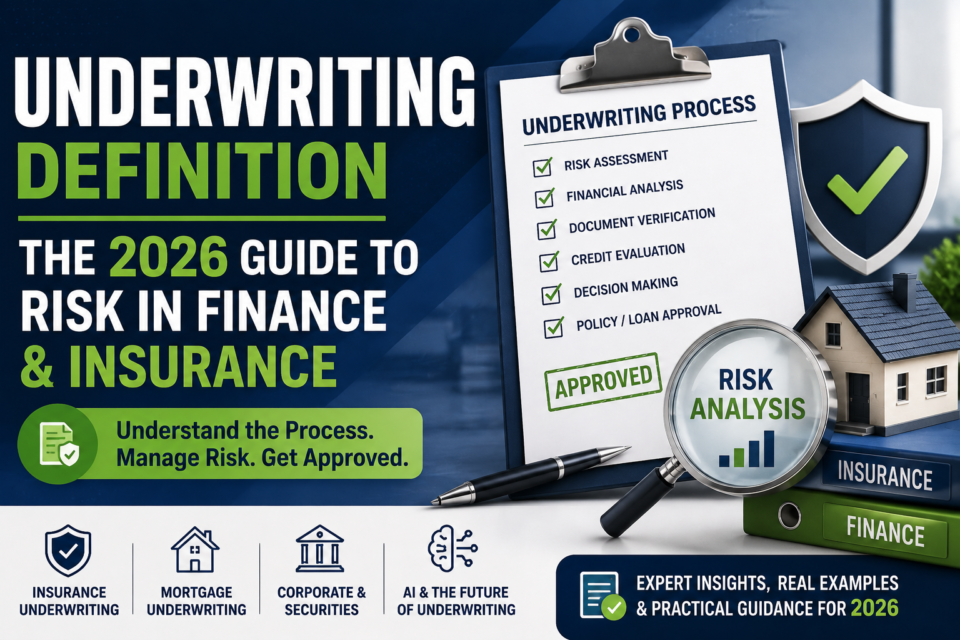
What is underwriting? At its core, it is the final safety check where a lender verifies that your financial reality matches your application. The underwriting process is not a trap it is a partnership. The lender wants to give you this loan they just need to prove to the federal regulators that they did their homework. Many borrowers ask “what does underwriting mean?” specifically in the 2026 market. It means that a human mortgage loan underwriter, supported by AI auditing tools, is confirming you can afford the home long term.
🛑 What NOT To Do During Underwriting (The Golden Rules)
To keep your mortgage loan underwriting process on the fast track you must keep your financial life “boring” and static. The underwriter is reviewing a “snapshot” of your life if that snapshot changes the review has to start all over again. Follow these rules strictly:
- Don’t open new credit cards: This can disrupt the credit underwriting process.
- Don’t finance furniture: Wait until the keys are in your hand to buy that sofa.
- Don’t buy or lease a car: This is the #1 cause of last minute loan denials.
- Don’t change jobs: Stability is the key for income verification during a home loan underwriting review.
- Don’t move large sums of money: Keep your bank accounts steady for audit trails.
A Realistic Scenario: From Panic to Keys
Sarah’s Story: The Missing Page (an illustrative composite of the most common condition requests)
The Panic: Sarah received a notice to submit to underwriting about a missing page of a bank statement from 2024. She panicked thinking the bank was suspicious of her savings.
The Reality: It was simply a compliance check. The underwriter noticed Page 6 of 7 was missing from a PDF upload. The AI system flagged it as “incomplete data.”
The Outcome: Sarah uploaded the page that afternoon. The underwriter cleared the condition in 4 hours, and Sarah received her underwritten approval the next morning.
How Long Does Underwriting Take? (Real 2026 Numbers)
A common concern is how long does underwriting take for a home loan. ICE Mortgage Technology — whose Origination Insight Report tracks a large share of US lender pipelines — has consistently reported the average purchase loan taking roughly 42 to 43 days from application to closing, with conventional files a little faster and FHA files slower because of government review steps. Underwriting itself typically occupies the middle third of that window. How far into that range your file lands depends mostly on documentation completeness and how quickly conditions are returned, not on the average. A loan sitting longer than about three weeks in underwriting without an update is the point at which a polite status request to your loan officer is reasonable.
| Stage | Typical Duration (Clean File) | What Can Extend It |
|---|---|---|
| Automated / initial underwriting review | Same day to 3 business days | Incomplete documents, credit-refresh findings |
| Conditions clearance (after you respond) | 24–48 hours per re-review | Slow document return, third-party letters of explanation |
| Full application-to-close timeline | About 40–45 days on average | Appraisal turnaround, title issues, government-loan layers (FHA/VA/USDA add days) |
Timelines vary by lender volume, loan program and file complexity. No lender can honestly guarantee a fixed day count — treat any such guarantee as a caution sign.
If you are wondering how long for underwriting to begin after your file is submitted: busy lenders usually start the first review within one to three business days.
Underwriting Approval vs Clear to Close
Many borrowers get confused when they hear “you’re approved,” but then receive a long list of tasks. Here is the breakdown of the loan underwriting process milestones:
Conditional Approval
This is the “Green Light with a To Do List.” It is a massive win and means 90% of the underwriting for a mortgage loan is done.
Clear to Close (CTC)
This is the finish line. The underwriter has cleared every condition and the audit is finished.
What Happens During Underwriting, Step by Step
Knowing exactly what happens during underwriting is the single best antidote to anxiety. Once your file is submitted, it usually moves through five recognizable stages. Each one answers a different question, and none of them is a verdict on you as a person.
Stage 1 — The automated first pass
Most conventional files first run through an automated underwriting system (AUS) — Fannie Mae’s Desktop Underwriter or Freddie Mac’s Loan Product Advisor. Think of AUS as a very fast triage nurse: it reads your credit report, income figures and property data, then recommends approve, refer with caution, or refer with findings. A “refer” is not a denial — it simply means a human underwriter needs to look at the details the machine could not resolve. Files that need a human from the start — self-employed returns, complex assets, government loans — skip ahead to manual underwriting, where a person evaluates the whole picture against written guidelines.
Stage 2 — Document verification by a human underwriter
The underwriter now checks that your paperwork proves what your application claims. They evaluate three things at once, often called the three C’s:
- Capacity — can you afford the payment? This is where income documents, employment verification and your debt-to-income ratio (DTI) come together.
- Credit — have you handled borrowed money responsibly? Score matters, but so do patterns: recent late payments, new debt, or a thin file all change the picture.
- Collateral — is the home itself sound security for the loan? The appraisal and title work serve this question.
What lenders verify here is exactly why the documents on your pre-approval checklist look the way they do: each form answers one of the three C’s.
Stage 3 — Conditions: the “yes, if…” stage
Most borrowers never receive an instant unconditional approval; they receive conditional approval — the lender is willing to fund if specific items are satisfied. Conditions sound alarming but are routine housekeeping: a letter of explanation for a large deposit, a complete two-year gap letter for an employment break, a signature page that was missing. Answer each one promptly and completely. This is the stage where responsiveness, not creditworthiness, decides your timeline.
Stage 4 — The credit refresh and final review
Days before closing, lenders typically pull your credit again. This is not distrust — regulations require verifying your financial picture hasn’t materially changed. New debt, a missed payment or a job change between approval and closing can re-open questions that were closed. This is why the “keep your finances boring” rules above are not superstition; they are protection for the snapshot you were approved against.
Stage 5 — Clear to Close
When every condition is satisfied and every figure matches, the underwriter issues a Clear to Close. For the full workflow around these stages — including who does what at each desk — see our breakdown of the mortgage underwriting process and the role of the underwriter.
What Does Not Mean You Should Panic
Borrowers routinely mistake ordinary process events for bad news. Here is how to read the signals honestly:
- “Conditions” on your approval — standard. The overwhelming majority of loans carry conditions. It means the underwriter wants proof, not that they doubt you.
- A re-request for a document you already sent — usually a filing or version issue, not suspicion. Resend it and note the date.
- An AUS “refer with findings” — a routing instruction. Human review continues; it is not a denial.
- Waiting several days without contact — queue reality, especially during rate-driven volume spikes and at month-end closings. Ask your loan officer for a status update instead of assuming silence equals failure.
- A second credit pull — compliance routine, not punishment.
Genuinely concerning signals are different in character: a new inquiry you did not authorize, an underwriter question about undisclosed debt, or a property condition issue the appraisal flagged. If you are staring down one of those, our guide to underwriting red flags and conditions explains what each one means and what can actually fix it.
When You Should Actually Be Concerned
Underwriting worry is proportional to what changed in your file after approval. Three patterns deserve immediate honesty with your loan officer:
- You took on new debt — a car loan, furniture financing or an opened card changes the DTI the loan was approved against. Sometimes a small paydown or letter of explanation restores the picture; sometimes the loan must be re-run.
- Your income situation changed — a job switch, reduced hours, or moving to self-employment mid-process can invalidate verified income. Stable employment through closing is one of the few hard practical rules of the process.
- Something surfaced you did not disclose — an old collection, a co-signed loan, or a deposit source you cannot document. Late disclosure is almost always recoverable; hidden items discovered by the lender rarely are.
Everything else — timing anxiety, repeated document requests, calendar silence — is overwhelmingly process noise rather than a verdict. The underwriter is not your opponent; they are checking the file so the loan survives audit. For a definition-first explanation of what that job actually involves, start with our underwriting definition guide.
The Complete Mortgage Documents Checklist
Stay ahead of the curve by preparing a robust mortgage documents checklist. By having your W-2s and tax returns ready, you reduce the chances of delays in your underwriting process for home loan. Check out our production ready mortgage papers checklist to see exactly what you need — why each document is requested and what it proves.
How Underwriters Review Your Tax Returns
If you are self employed, the underwriter will analyze your IRS filings for consistency. This is a standard part of credit underwriting process for non traditional earners. They are looking for your “Net Income” to ensure you have the capacity to comfortably afford the new monthly payment.
Mortgage Underwriting Red Flags to Avoid
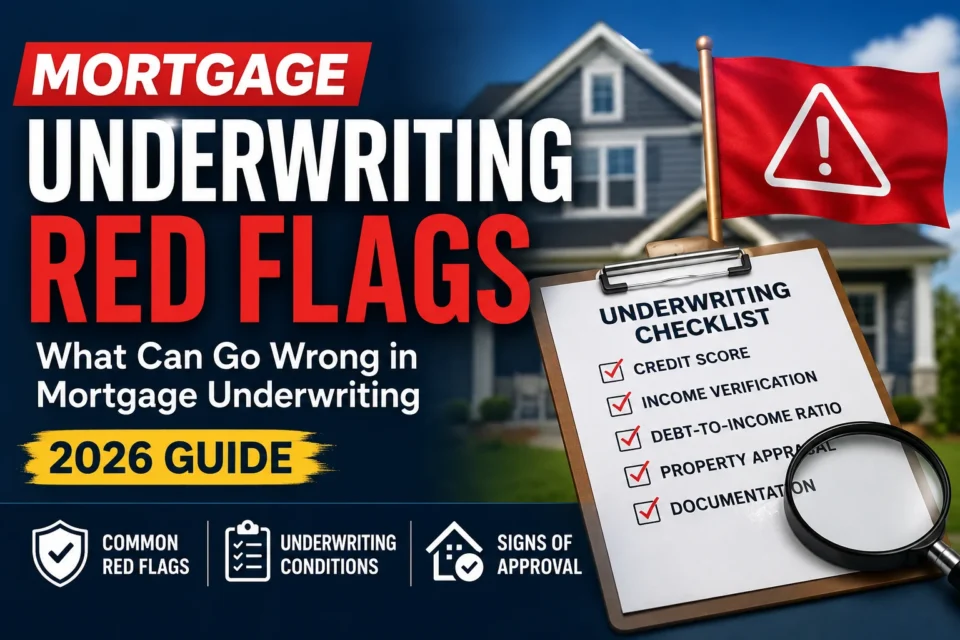
By identifying common underwriting red flags early you can take steps to fix them before they jeopardize your loan. These triggers often include large unexplained deposits or undisclosed debts. We have mapped out the most common pitfalls in our guide to mortgage underwriting red flags and conditions.
Frequently Asked Questions
What is home loan underwriting?
It is the process of a lender verifying your income, assets, credit and the property’s value to ensure the loan meets safety guidelines.
How long does the underwriting process take?
Typically, how long does mortgage underwriting take depends on complexity and lender volume: a clean file is often reviewed within days, while the full application-to-close timeline averages roughly six weeks.
What does underwriting a loan mean for me?
It means your application is being finalized. What does a underwriter look for specifically? They look for consistency between your words (the application) and your proof (bank statements and pay stubs).
How long does loan underwriting take for a personal loan?
A personal loan underwriting process is much faster than a mortgage often taking only 24 to 48 hours since there is no property collateral to verify.
How long does underwriting take after conditional approval?
Once you provide your conditions it usually takes 24 to 48 hours for an underwriter to review the new documents and issue a final approval.
Does a document request during underwriting mean my loan is in trouble?
No. Requests for extra paperwork — a letter of explanation, a complete bank statement, an employment verification — are routine verification steps, not signals that something is wrong with your file. What matters is the pattern: a long chain of requests that keep changing subject, or an underwriter questioning items you already clearly documented, is worth a conversation with your loan officer.
How serious is a conditional approval?
Conditional approval is good news — it means the underwriter is prepared to approve once listed items are satisfied. Treat the conditions like a checklist with a clock: return them complete and quickly, and keep your finances frozen until closing.