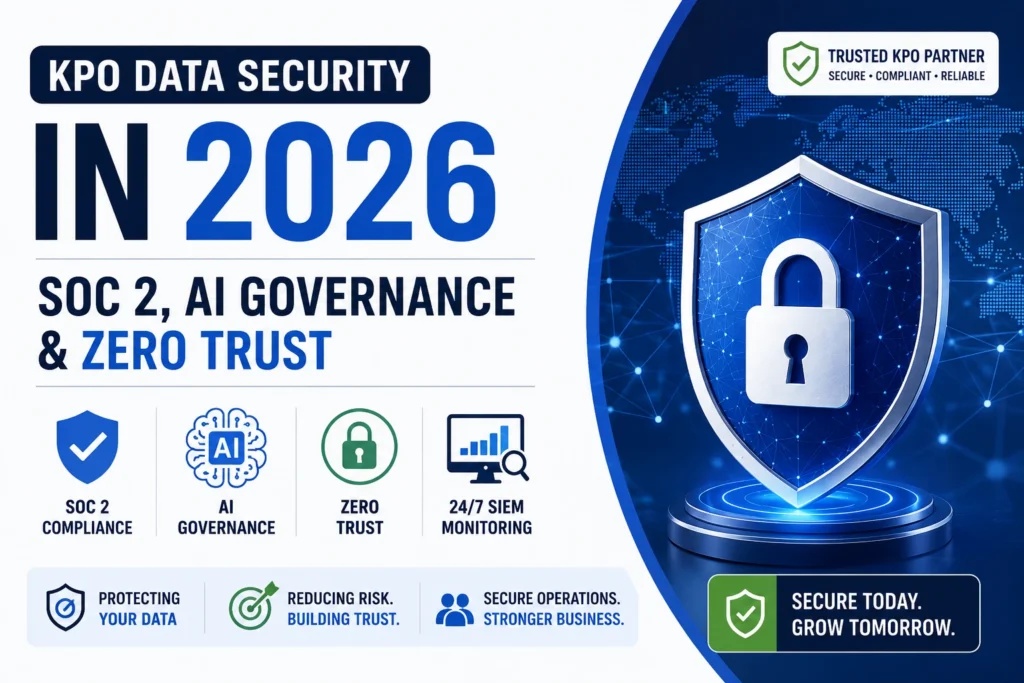
For financial and mortgage leaders, maintaining Outsourced Financial Security isn’t just about efficiency it’s about trust. When you move sensitive underwriting or research tasks offshore, you aren’t just moving labor; you are moving your most valuable data. In 2026 a single data breach is more than a legal hurdle it is a brand-destroying event.
2026 Security Benchmarks: The Cost of a Breach
According to the 2025 IBM Cost of a Data Breach Report, the average cost of a breach in the United States reached a record $10.22 million. Furthermore, the rise of the Insider Threat creates a critical risk for firms seeking Outsourcing Data Privacy, as these incidents now cost organizations an average of $4.92 million due to detection difficulties.
At CapStonePlanet, we recognize that “Point in Time” security has become obsolete. Consequently, our framework prioritizes Continuous Verification. Organizations that extensively use AI driven security automation such as our SIEM-monitored workstations detect and contain breaches 80 days faster than those using manual monitoring. As a result, these firms save an average of $1.9 million in remediation costs.
How Our KPO Security Infrastructure Works
We do not merely discuss “strategic security”; rather, we implement rigorous KPO Security Standards directly at the workstation level. To illustrate, we build our security infrastructure on four technical pillars:
1. VDI Isolation and Data Containment
Our analysts utilize a Virtual Desktop Infrastructure (VDI) environment. This ensures that we never store data on local hardware. Moreover, once an analyst ends a session, our system automatically wipes the virtual environment to prevent residual data leaks.
2. VPN & Network Segmentation
We silo every client project into a unique network segment. Consequently, this prevents “Lateral Movement”—if an attacker compromises one analyst’s credentials, they still cannot pivot to your sensitive data. Furthermore, we implement strict firewall rules to govern all cross-segment traffic.
3. Endpoint Protection & DLP
We deploy Data Loss Prevention (DLP) software that actively disables USB ports and blocks unauthorized screenshots. Additionally, the software monitors for “RegEx” patterns, such as SSN or Credit Card formats, in real-time to block suspicious data transfers immediately.
4. SIEM Monitoring
Our Security Information and Event Management (SIEM) platform (utilizing Splunk/Sentinel) flags unusual behavior instantly. For example if a user attempts to access a file at 3:00 AM or initiates a sudden spike in data exports, our security team receives an immediate alert to intervene.
Shadow AI: Mitigating the 2026 Insider Threat
Last year, Shadow AI—the unauthorized use of public AI tools—played a role in 20% of all breaches. To prevent your proprietary research from training public models, we implement Context-Aware Security Policies. Subsequently, our subject matter experts access Secure AI Sandboxes where our system automatically scrubs all prompts for PII (Personally Identifiable Information). Therefore, you gain Agentic AI efficiency without compromising your intellectual property.
Real World KPO Security Use Cases
Scenario A: Mortgage Underwriting Security
The Challenge: An analyst processes a mortgage file containing W2s, tax returns, and credit reports. The Solution: We implement RBAC (Role-Based Access Control). As a result, the analyst can only view the specific borrower assigned to them. Furthermore, our system monitors for “Session Recording” or unauthorized print attempts, terminating the session instantly if it detects a violation.
Scenario B: HIPAA for KPO Insurance Review
The Challenge: Handling Protected Health Information (PHI) across international borders. The Solution: We implement strict HIPAA for KPO protocols by signing a formal Business Associate Agreement (BAA). Subsequently, we process all PHI data via Geo-Fenced storage, ensuring the data never leaves the required legal jurisdiction.
Compliance Frameworks: Beyond SOC 2 & HIPAA
While SOC 2 Compliance KPO serves as our baseline, we align our Financial Underwriting KPO Services with a broader range of global standards to ensure total data integrity. These include:
- GDPR (General Data Protection Regulation): We prioritize the “Right to Erasure” and data minimization for all European clients.
- ISO 27001: We maintain the global benchmark for Information Security Management Systems (ISMS).
- PCI DSS: We perform quarterly vulnerability scans for all projects involving payment card data.
- Data Residency: We document exactly where your data resides to ensure compliance with US state laws and the EU Data Boundary.
Secure Your KPO Roadmap Today
Don’t settle for “Checklist Security.” Partner with an operational leader who prioritizes your Outsourced Financial Security through active defense.
FAQ: Common Questions on KPO Data Security
Q: How do you prevent insider threats in a KPO environment?
According to IBM , insider threats represent the costliest breach vector in 2026, averaging $4.92 million per incident. Therefore we mitigate this risk through a combination of technical and physical controls. For instance we utilize ‘Least Privilege’ Role Based Access Control (RBAC) to ensure an analyst only sees the documents necessary for their specific task. Furthermore, our analysts work in ‘Clean Rooms’ where we strictly prohibit smartphones and recording devices. Simultaneously, our SIEM tools log every session and flag anomalous behavior, such as a user attempting to export a file they haven’t touched in weeks. Consequently, our security team can intervene before data leaves the environment.
Q: What is the actual technical stack used for KPO data protection?
We build our security infrastructure on a layered defense model. Specifically we encrypt all data at rest using AES 256 standards and protect data in transit via TLS 1.3. Furthermore, analysts access client environments through secure Virtual Desktop Infrastructure (VDI), ensuring that no data ever resides on local hardware. We also implement VPN segmentation to isolate client networks. As a result, we prevent lateral movement even if an endpoint becomes compromised. Additionally we use Data Loss Prevention (DLP) software that automatically blocks screenshots and monitors for sensitive patterns like Social Security Numbers in real-time.
Q: Why is SOC 2 Type II more important than Type I for KPO?
A SOC 2 Type I report merely provides a snapshot of security control design at a specific moment. However a high stakes partnership requires more proof. Conversely, a SOC 2 Type II report evaluates the operational effectiveness of those controls over a 6 to 12 month period. It proves that we kept the firewall up and never bypassed MFA. Furthermore, it verifies that we consistently reviewed access logs. Therefore for regulated industries like mortgage lending a Type II report remains the industry standard for verifying that a KPO partner maintains a consistent security posture throughout the entire engagement.
Q: How do you handle ‘Shadow AI’ risks in 2026? Shadow AI the unauthorized use of public AI tools involved 20% of breaches last year, adding an average of $670,000 to remediation costs. Consequently, at CapStonePlanet we employ ‘Context-Aware’ web filtering to block access to public LLMs. Instead, we provide our subject matter experts with a secure, private AI instance. In this environment, our system automatically scrubs all prompts for PII (Personally Identifiable Information) before processing. As a result, our team leverages AI for efficiency without risking the contamination of public models with your proprietary data.
Q: Does CapStonePlanet comply with global data residency laws? Yes. Due to the rise of regional laws like the EU’s GDPR, data residency is now mandatory. Therefore, we utilize a ‘Geo-Fenced’ cloud infrastructure to ensure your data stays within your required jurisdiction. For example, if a mortgage underwriting project requires data to remain in the US, we configure our VDI and storage instances to US-only regions. Furthermore, we maintain a detailed ‘Data Map’ for every client. This map documents exactly where we store data and how we securely purge it according to your retention policy.